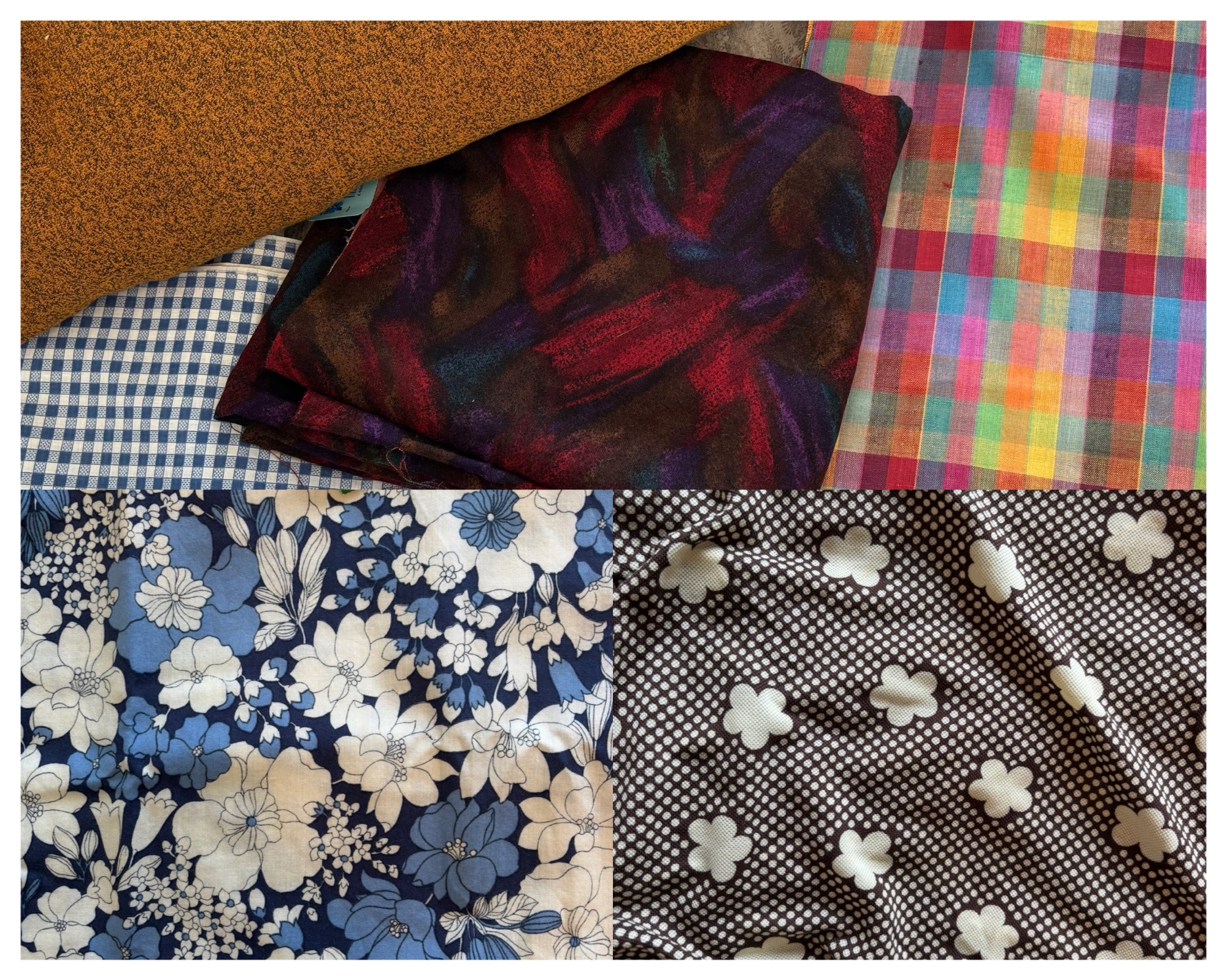
My husband and I made a big push this winter to get our apartment in good shape. We meant to do it last summer and fall but kept postponing the undertaking because we were either away or too busy. It wasn’t exactly tempting to miss out on more enticing activities in order to tackle what seemed an overwhelming chore. As things naturally slowed down and nature forced us to stay home, however, we ran out of excuses and had to get started.
This process—mostly complete now bar a few outstanding tasks—was a whole lot of work but incredibly satisfying. The best part, I think, was curating our belongings: getting rid of what we didn’t want or need and replacing some of the remaining worn-out, cheap-to-begin-with artifacts of our grad-school days. (We also bought a new couch because the one we had was awful.) The result was both visibly and emotionally rewarding. I won’t say we cleared out negative vibes because that would sound too woo-woo; what I will say is that the less cluttered my brain is with unwanted thoughts and worries, the more distracting the clutter in my environs becomes and vice versa, and I want the space in which I live to reflect where I am rather than a former version of me who didn’t have the bandwidth to care.
The worst part was confronting the sheer amount of stuff we’ve accumulated in the three years we’ve lived in our place. No one likes to think themselves a hoarder, but yeah, we were edging dangerously close to deserving that label. In our defense, the vast majority of the “new” items that’ve entered our home were bought secondhand. I can’t remember, for example, the last time I purchased a non-thrifted article of clothing (with the notable exception of underwear; even I have my limits). But nothing’s a good deal if you didn’t need it to begin with, and even a cashmere sweater or a silk shirt is a burden if you have nowhere to put it. With that in mind and my eyes newly opened to the impact that a stuffed cupboard has on my mental health—and the awareness that I wear the same small selection of garments, most of which I’ve sewn, over and over again—I managed to bring my clothes-thrifting phase to a near-end. Slowly but surely, I’ve been sorting through my wardrobe and begun putting together a bag of items to redonate. My husband’s done the same.
Parting ways with designer goods I was thrilled to find but never actually put on has been surprisingly easy, and I’m embracing the concept of “catch and release” at my local Sally Ann when it comes to most things. “Most things,” of course, does not include fabric.
The causes of this deep-seated resistance to saying no to ugly metreages that will realistically be a permanent fixture in my stash are multiple, as are the problems that arise from my fabric-thrifting habits.
Problem #1, if I can call it that, is that I’ve found so many incredible pieces of beautiful wool, high-quality cotton, vintage prints, etc. Even being way pickier about what I buy (I rarely look at the bedlinens, and I steer clear of polyester) and more realistic about what I might hypothetically use (I’m not likely to sew up a sheer silk), my hoard has kept growing, and growing, and growing. I blogged about this nearer the beginning of my thrifting days and followed through on some of the steps I claimed I’d take, but the painful truth remains: there’s only so much fabric one woman can use in a lifetime. And yet it’s so hard to stop looking, and I’m very good at convincing myself that it would be stupid to pass on an excellent metreage. I never buy new-new fabric unless I know exactly what I’ll do with it. It would seem irresponsible, on the other hand, to leave four metres of a Liberty London wool-cotton blend priced at $3.99 on the rack. (I mean, that legitimately would be a reckless move. I 100% don’t regret that purchase.)
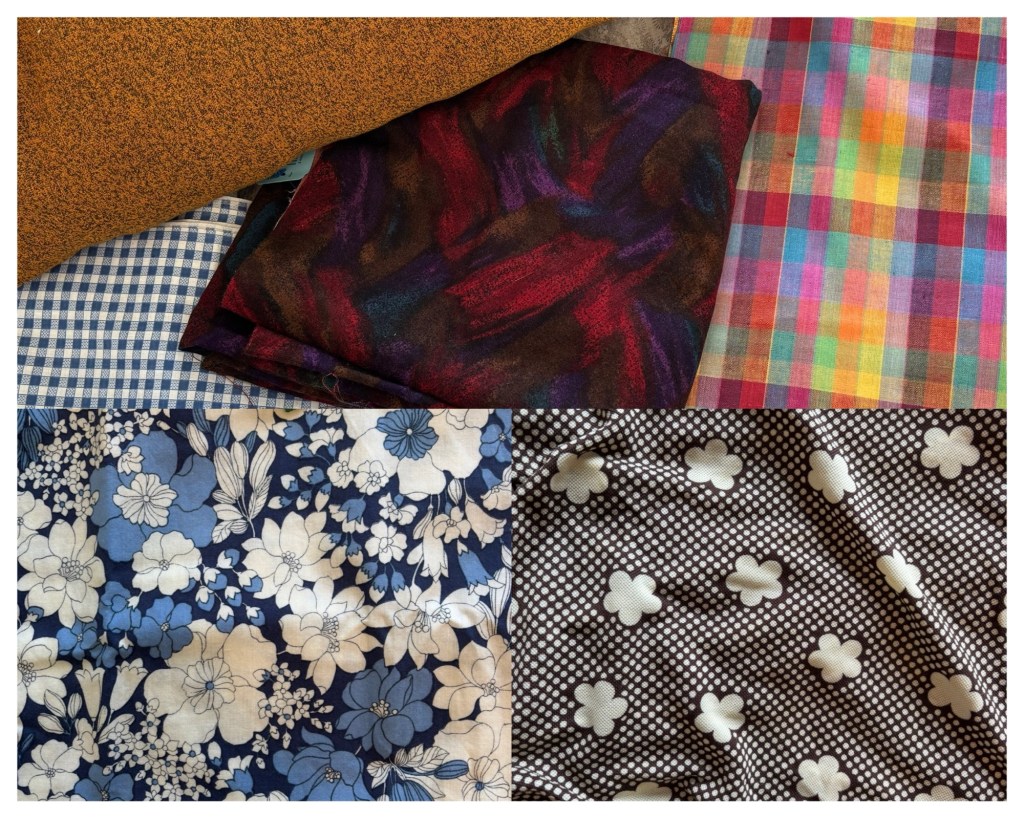
Problem #2 is related: how to store it. When I refashioned the master bedroom into a sewing studio that just happens to have a bed, I claimed the large closet for sewing and other craft supplies. At the time, I thought I’d never fill it. Well, it’s now overflowing in the literal sense; closing the doors is a struggle. To keep the dreaded clutter at bay and avoid physical and mental chaos, I must go through the closet and reorganize everything held within on a regular basis. This isn’t sustainable if I’m to maintain a minimal degree of sanity.
Problem #3 is the paradox of choice. As a general rule, I’d much rather have a small, curated selection to choose from than a larger one. Case in point: my husband and I went to Costco a single time and required a debrief session afterwards—it was that traumatic (we’ve never gone back and likely never will). The same goes with fabric. I find most larger fabric stores intimidating at best and often leave with nothing because I get so flustered and overstimulated trying to decide that I end up giving up in frustration. Without meaning to, I’ve replicated this situation in my own home.
Problem #4 is that this abundance of selection leads me to get stuck in the planning. I’ve come to like the preparatory phases of sewing just as much as I like the sewing itself, and acquiring new fabric allows me to indulge in fantasies and engage my imagination while I plan what I’ll make with it and stall the critical making-it part. Sometimes, I start with a pattern (pattern hoarding being an issue unto itself) and spend literal hours sifting through Fabric Mountain to match it with the “perfect” textile only to unearth another option and change my mind. Sometimes, I’m drawn to a particular fabric and spend hours going through patterns but then think about the bigger picture (wardrobe gaps, skills I’d like to acquire, etc.), reconsider, and start over. It’s a never-ending cycle.
Problem #5 is that I have a really hard time allowing myself to use it. This is especially the case because much of my stash is thrifted and vintage and therefore a finite resource. It might seem paradoxical to claim that it’s at times more challenging to cut into a metreage I paid $4.00 for than a piece I ordered online for ten times that amount, but it’s true. If I mess up while sewing a garment from one of my prized vintage finds, it adds extra insult to agony/guilt/shame/depression to know that no second attempt is possible.
Problem #6 is that looking for, purchasing, admiring, and sorting so much fabric takes away from the time available to me to sew with it. It is, in fact, a separate hobby. After checking out, I pile my textile trophies into a precarious heap in my lap, pushing the boundaries of what I can safely carry while operating my wheelchair; bring home my treasures like medals after an Olympic event; and execute an entire ritual that involves my measuring each piece and recording the dimensions, along with pictures, in Threadloop, the only social-media app that’s healthy for me. Next are the washing (or the freezing for wools), the ironing, and the folding. When I’ve finished with that, I have to decide where it should reside. (Believe it or not, there’s some order in my fabric closet. I have a system, just a bad one.) Then I grapple with problems 3 and 4 a little, then I remember that I have other obligations to attend to, and so my sewing machine sits idle despite my having spent hours on sewing-related tasks.
Clearly, something has to give here.
Again, it’s not as if I haven’t taken preliminary action. I have come up with a set of criteria as to what to purchase and what to leave behind, and I’ve been good at sticking with it. I can’t remember the last time I bought a 90s-era polyester monstrosity thinking that recreating the worst that the fashion trends of my childhood had to offer would be a fun nostalgia project. I scored a king-sized 100% linen duvet cover in a gorgeous deep green a few weeks ago and am very excited to turn those twelve-ish metres of high-quality fabric into a monochrome summer wardrobe, but I’ve been firm with myself and ignored many a charming 70s sheet. Most critically, I recently took the next major step in this fabric-hoard-management journey on which I’ve embarked. I’d just wasted yet another hour I could have spent sewing wrangling metreages into teetering stacks and was thus freshly aware of the consequences of my caving to my weaknesses. Exhausted and frustrated with myself, I made a decision: no more thrifting until I’ve gone through and documented every. single. piece of fabric in my collection and purged anything and everything I’m on the fence about. This prospect is as daunting as it is exciting, but the payoff—a more orderly space and a tidier conscience—will be worth any distress that the process might cause.
Ironically, I started writing this post last Wednesday, got sidetracked for various reasons, stopped at the thrift store on the way home from a blood test because I deserved it, right?!?, and, yep, bought not one, but two very long, very lovely metreages. Both vintage. Both gorgeous. Both priced at $3.99. This after I swore, in writing, no less, that I’d take an extended break. Do I feel guilty? Mildly. Do I regret it? No. Did I spend forty-five minutes examining it and documenting it and jotting down ideas as to what I’d make with it? Yes. Still, this is additional evidence that I really need to examine my priorities. It also confirms that I’m in the “preparation” stage of the model of behavioural change and not squarely in the action one. I’ll get there, though, and I haven’t even glanced at the fabric section since.

