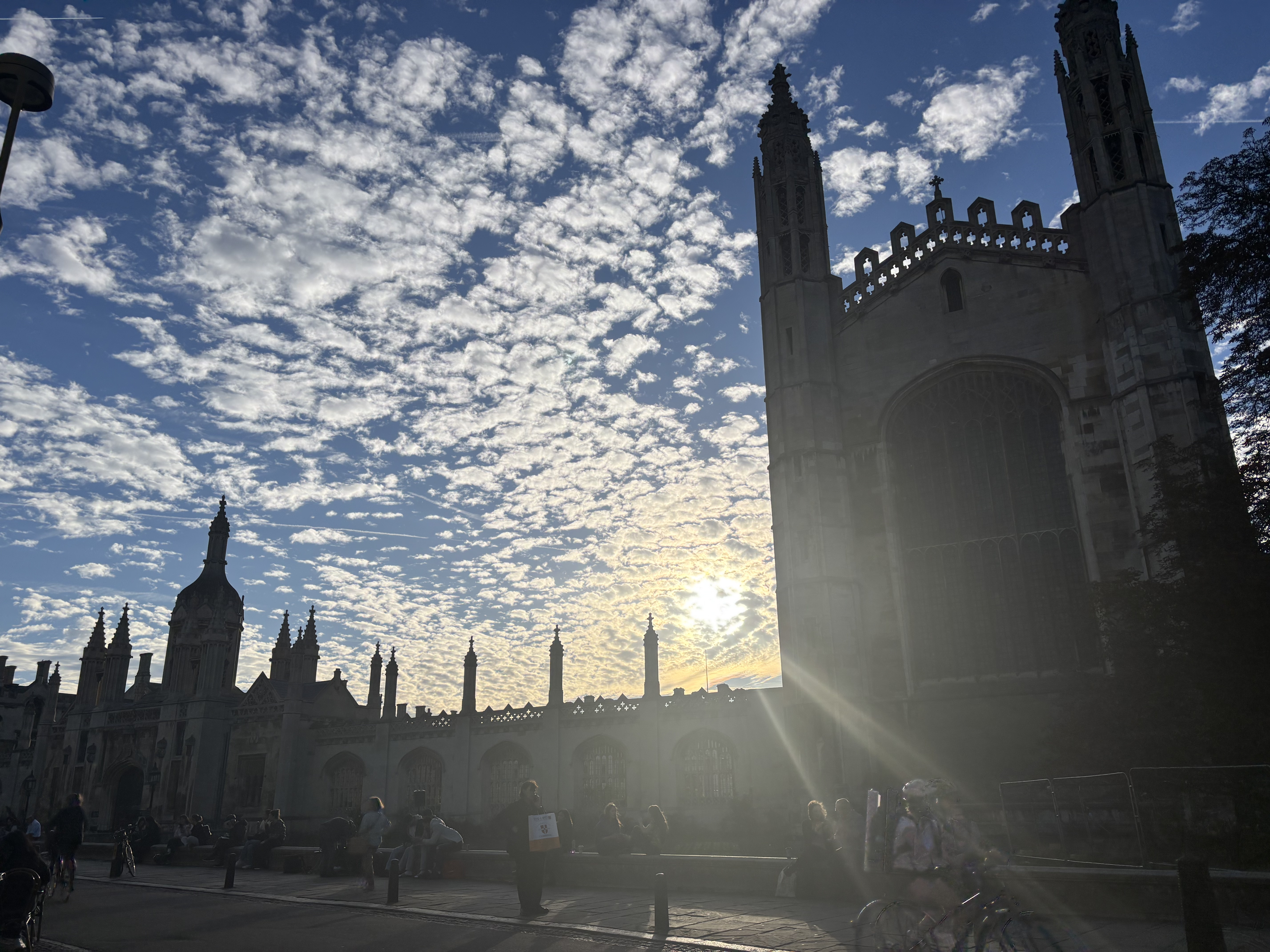
My husband and I are nearing the two-week mark of a month in the UK, and man oh man. I knew that this is what I wanted and sensed that it was what I needed. I couldn’t have anticipated, however, just how transformative it would be. As in, utterly, wholly world-shifting.
This trip, the latest stop of the Redemption Tour I commenced a few summers ago and have continued ever since, has been a long time coming. It seems a miracle I’m here, in a entirely different space both physically and mentally than I was last month (let alone when I was discharged from the rehabilitation hospital and left bed-bound at home in 2023). In some ways it is miraculous if you count access to the life-saving treatment that’s allowed me to stick around as an act of divine intervention. Seriously, thank God for modern medicine. More than anything, though, it’s a result of a heck load of doggedness, hard work, and constant reminding myself that I’m not obliged to settle for what I’m told I should.
Usually for better and sometimes for worse, I’m not great at accepting my fate. I’m not one to lie back and take it, either. This month abroad attests to that. I’ve always been a carrot person rather than a stick one, and travel was, and is, a carrot so huge it’d earn its grower a blue ribbon at a county fair; I swear that it’s motivated me to perform superhumanly feats of recovery that doctors vowed I’d never manage. Throughout my twenties, I voyaged widely and often. It was one of the aspects of my life I valued the most, it helped keep me well, and it played a pivotal role in shaping who I was, so having it taken from me as a consequence of chronic illness and disability was a major blow to my self-identity and ego. Indeed, I felt its lack acutely. It’s not surprising, then, that I started pushing for a series of longer and longer adventures further and further afield as soon as it reentered the realm of what a reasonable individual might consider feasible, if only remotely so. My husband and I approached this phase of reclaiming what we’d lost methodically: first was a night in a hotel downtown, next a night in a nearby city, next a weekend getaway. When we were sure that we could handle it, we started ticking off destinations important to our lives and history, places to which it had been unclear whether or not we’d ever be able to return. North Carolina to visit my husband’s family. British Columbia to visit mine. Each success built on the last. As my world expanded, my health improved, and, seeing how profoundly it enhanced my quality of life and willingness to tolerate the hard stuff, I trained my sights higher and higher. I managed to rise to each challenge, albeit imperfectly on occasion, and was all the better for it. I was coming back into myself one expensive plane ticket at a time and learning to trust my ability to problem solve and connect with the person I once was while figuring out who I’m meant to be.
By the end of 2025, my husband and I were both confident that we’d conquered North America. Although the idea was, I’ll admit, a little intimidating, it was time to take on Europe. We met in Germany—see, travel!—but hadn’t gone overseas together since, and despite his Anglo-heavy roots, he’d never been to the UK. England was a natural destination for our first Euro trip with me in a wheelchair in this regard but also because it has quite robust accessibility laws and we had the security of knowing that we’d be able to effectively communicate with the locals should unforeseen medical issues necessitate it. After debating various options, we settled on Cambridge, the city I feel most at home in the world for reasons I’ll explain some other time, and decided to give ourselves four weeks: long enough to truly experience what it’s like to live somewhere else with a homey place to rest between day-long jaunts to surrounding cities.
I was, to put it mildly, pumped, but it was a hypothetical that I worried would slip between my contracted fingers until we booked flights (just as oil prices started to rise) and found an appropriate Airbnb and reserved it. We were locked in. This was happening.
As the trip drew nearer, I was excited and optimistic that things would go well. We’d carefully planned everything we could and put contingencies in place to account for bumps that would inevitably arise, and I hoped that our meticulous preparations would result in a full and fulfilling experience in which my being a wheelchair user wouldn’t be the deal-breaking, vacation-ruining barrier to enjoyment and participation that many able-bodied people in my life seemed to think it would be (interestingly, my disabled friends were uniformly less concerned). I’ve proven myself right. Save a few hiccups, the trip has gone remarkably smoothly, almost eerily so, and we’ve both been pleasantly surprised by how accessible Cambridge and London have been.
Ironically, the biggest complication to date had nothing to do with my mobility or the bodily dysfunction to which I’m habituated, nor with logistical details we could’ve foreseen, but was illness-related nonetheless: in short, I was violently sick the entire flight with GI issues. Out of respect for your sensibilities I’ll remain vague as to what these were. Suffice it to say that I was nauseated, sore and achey, and unable to sleep more than five minutes at a time before being roused by my digestive tract informing me that I was due for another visit to the cramped toilet with which I had become all too acquainted. (Whether the cause was heat illness or food poisoning, it was not fun. I state with great certainty that the last time I felt so physically awful, I was in the ICU with the wicked combo platter of C. diff and COVID.) After I’d finally vomited whatever poison still lurked in my stomach into a Ziploc bag while waiting at the luggage carousel; choked down a chicken-and-stuffing sandwich I desperation-purchased as part of the Oh Holy Ready Meal at a WH Smith—the first store selling food I saw, and therefore where I went—at the arrivals terminal; and plopped into bed in the room at the Hilton we’d very wisely booked for the day to get some rest before proceeding onward, I was definitively on the mend. By the time our bus arrived in Cambridge, I was more or less good as new.
I can’t overemphasize how comically harrowing that experience was. In retrospect, however, I see it as a weird sort of blessing in that it’s led to my making pretty drastic and much-needed changes that I wouldn’t have believed myself capable of two weeks ago. It was also a true test of my and my husband’s ability to cope, and cope we did! I physically weathered my digestive system’s assault while simultaneously navigating the trials that come with all travel but are especially burdensome when one’s primary form of ambulation is a wheelchair. We worked together to figure things out despite being sleep-deprived and jet-lagged, and we emerged from the yuckiness all the more confident and ready to lean into our UK adventure. It’s been wonderful thus far and surreal at times, and we’ve managed to balance excitement with calm and connecting with each other with connecting with friends and, for him, colleagues. Our most exciting plans are yet to come.
I’ll end this instalment of what will be a multi-part behemoth of an update by repeating what I wrote way back in the first paragraph: that I knew that this is what I wanted and sensed that it was what I needed. It’s been validating to confirm that I was more right than I dared hope even as I allowed myself to believe that I’d manage just fine. As someone for whom SE-AN (look it up) counts among the triad of conditions that most heavily impacts her, epilepsy and OCD being the other two of that merciless trinity, I’m used to medical professionals implying or outright stating that I don’t know what’s in my best interest. As a result, I’ve internalized the idea that I should doubt myself when it comes to knowing what my body needs to keep it running and, as an extension, what I need, as a human, to survive. The big lesson of 2026 has been that I have more self-awareness than I’m given credit for or give myself credit for. Here in Cambridge, I’m gathering evidence that I’m capable of something else: shifting my approach and translating intention into action, relatively quickly, when I’m in a position to put the pieces together and project forward to a future that suddenly appears bigger and brighter and more intellectually rewarding than it has in over a decade.
More later. Now, yet another wheelchair ride to my beloved Marks and Spencer for a ready meal and a vanilla slice because I can and I will and why not.

