I learned about the upcoming craft fair from close friends. They were over to help me and my husband put up and decorate our Christmas tree, so I was already in an especially festive mood—and even on my glummest, most humbuggy days, my eyes light up at the prospect of attending any craft fair, no matter how big or small.
So imagine my delight when they told me that a disability-centred holiday market would take place—in my neighbourhood, no less!—in a week’s time.
We made plans to meet there the day of the event. Throughout the intervening week, I very vocally communicated my excitement to pretty much everyone I spoke with, managing to weave it into way too many conversations.
It only occurred to me a few hours before we left for the market that I was almost definitely overly hyping it up. No matter: I was committed to appreciating the experience, even if that meant pretending that it was better than it actually was.
My husband and I met these friends at the venue right as the craft fair began. The space was beautifully decorated, thoughtfully laid out, and already bustling with people. There was a great variety of vendors selling a range of quality goods. I was immediately impressed.
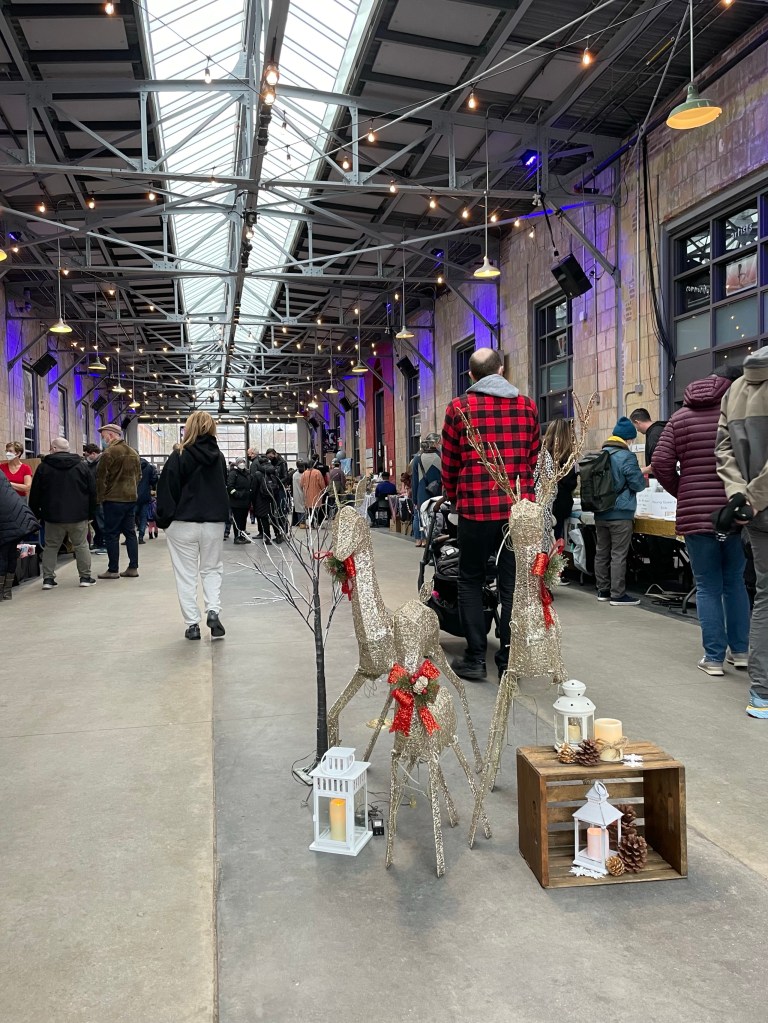
We went from table to table, and I grew more and more emotional. The atmosphere was one of genuine, unquestioning acceptance of everyone in the room. Attendees and organizers mingled and communicated using methods and aids that made sense for each individual, that were seamlessly integrated, and that facilitated real independence and autonomy. As I was buying (bad-ass) stickers from a maker who uses a power chair and who happens to have foot issues similar to mine, the topic of accessible shoes arose naturally. (They recommended a brand. I’ve already ordered a pair!) I only clued in to the fact that the person sitting at their side was a support worker, not simply a friend, a few minutes into our conversation. The two of them operated in quiet, beautiful symbiosis. Later, I was chatting through an interpreter with vendors who were selling gorgeous cookies. As with the support worker mentioned above, the interpreter was just there, doing a job and thus allowing the vendors to do theirs.
Again, symbiosis. Respect. Independence. Autonomy.
I had to take a short break halfway through touring the tables. While resting in an area set up with chairs and lanterns, my husband and I debriefed. I was overcome with emotion and started to cry—a rarity for me. I’m pretty sure I saw a drop or two roll down his cheek, too.
These were, of course, happy tears, tears of gratitude. See, I seldom feel the sense of belonging I did that day. Seldom do I feel as if it’s OK to be all aspects of myself without playing down those less palatable, those that make many people uncomfortable. There’s this common assumption that I must want to change—that I must perceive as inherently flawed the parts of myself that don’t conform to what’s usually portrayed as being “normal.” In that room, last weekend, something in equal measures radical and obvious came to me: that perhaps trying to change so that I look and function as someone and something I’m not isn’t my responsibility. With the right supports and environmental adaptations, I can live a full, meaningful life just as I am.
 De Morbo Sacro: Life and/with Epilepsy
What a great concept!! So glad that you found it. Good insights!!